






Leading aviation forward starts with partnership
By Dirk Goovaerts, CEO Continental Europe, the Middle East, Africa, India and Global Cargo Chair, Swissport
Across Continental Europe, the Middle East, Africa and India (CEMEAI), aviation is evolving at extraordinary pace. Passenger demand continues to grow, cargo networks are becoming more complex, and expectations around safety, resilience and sustainability have never been higher.
It is also one of the most diverse aviation regions in the world. From major European hubs to rapidly expanding markets across the Middle East, Africa and India, every airport environment presents different operational realities and growth opportunities.
Across CEMEAI alone, Swissport operates at 107 airports, serves more than 45 million passengers annually and handles 2.4 million tons of cargo across some of the world’s most dynamic aviation markets.
What increasingly defines success in this environment is not only scale, but the ability to combine global expertise with local understanding, operational discipline and long-term partnership.
That is especially true in ground handling and cargo operations, where operational reliability is increasingly built on the ground long before an aircraft departs.
Safety is built through culture
In aviation, safety will always remain the industry’s top priority. But maintaining strong safety performance today requires more than procedures and compliance frameworks alone. It requires culture, accountability and trust.
Across CEMEAI, we continue strengthening our safety-first culture through Swissport’s iCare program and broader Zero Harm vision. One of the most important developments has been building a stronger “speak up” culture where colleagues feel empowered to report risks and operational concerns early.
For me, the strongest safety cultures are always visible on the frontline. They are created when teams know standards are consistently supported through leadership, training and everyday decision-making.
In CEMEAI, our safety culture is reflected in measurable results. Earlier this year, the region achieved 100 consecutive days free from major and hazardous aircraft damage resulting in aircraft-on-ground events greater than 60 minutes — a milestone driven by frontline discipline, procedural compliance, and a strong speak-up culture focused on preventing incidents before they occur.
That matters even more as aviation grows increasingly operationally complex. Whether operating at hubs such as Amsterdam Schiphol and Frankfurt, supporting growth in Saudi Arabia, or managing specialist cargo operations in Nairobi and Liège, maintaining consistent safety standards across diverse environments is essential to operational resilience.
Safety and operational performance are closely connected. Strong safety cultures reduce disruption, improve consistency and create greater confidence for airline customers.
Operational excellence requires long-term investment
Across the region, airlines increasingly evaluate partners not only on current performance, but also on their ability to support future growth.
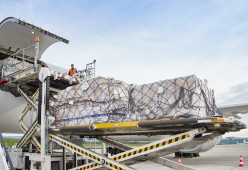
That is particularly visible in cargo, where the growth of pharmaceuticals, perishables and e-commerce is placing new demands on infrastructure, visibility and specialist handling capabilities.
In air cargo, CEMEAI handled 2.4 million tons of cargo in 2025, including significant volumes of perishables and pharmaceuticals moving through Europe’s “Flower Corridor” via Amsterdam, Brussels and Liège. Swissport continues to expand its cold chain infrastructure, including a 9,500 m² warehouse expansion at Amsterdam Schiphol to support growing demand for temperature-sensitive cargo.
The Middle East also continues to present major long-term growth opportunities. Saudi Arabia’s aviation transformation is creating demand for scalable, high-quality ground services that can support both passenger and cargo expansion.
Operational excellence today is not simply about handling volume. It is about delivering consistency under pressure, adapting quickly to change and supporting customers with infrastructure capable of scaling alongside their ambitions.
Customer centricity means understanding local realities
Operating across a region as diverse as CEMEAI reinforces an important lesson: there is no single operational model that works everywhere.
Customer expectations differ across every market and airline business model. Low-cost carriers prioritize speed and turnaround efficiency. Premium airlines place increasing emphasis on passenger experience and reliability. Cargo operators require visibility, specialist expertise and operational flexibility.
For me, customer-centricity is about understanding those realities and adapting accordingly.
That is why Swissport’s operating model combines global standards with local expertise. It allows us to maintain consistency while remaining flexible to customer and market-specific needs.
Customer feedback is embedded directly into how we operate. Swissport is the only global aviation services provider to gather structured customer feedback through weekly Net Promoter Score (NPS) surveys, giving our teams real-time operational insight and allowing us to respond quickly to customer needs and continuously improve service delivery.
It is also why long-term partnerships matter so much in aviation. The best operational relationships are collaborative partnerships built around transparency, responsiveness and shared goals.
Sustainability is becoming operationally critical
Aviation’s sustainability conversation has evolved significantly in recent years. What was once viewed primarily as a future ambition is now becoming an operational and commercial expectation.
Airlines increasingly expect partners to support their environmental goals with measurable progress and practical operational solutions.
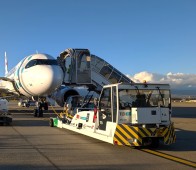
Sustainability is also becoming increasingly operational. Swissport has committed to electrifying 55% of its global motorised ground support equipment fleet by 2032. Globally, 26.3% of the fleet was already electrified by the end of 2025.
But sustainability is not only about emissions targets. It is also about building more efficient operations, reducing waste and creating more resilient infrastructure for the long term.
Progress will ultimately depend on collaboration across the aviation ecosystem, with airlines, airports, handlers and suppliers all playing a role.
Innovation still depends on people
Technology and digitalization are reshaping aviation operations across every region.
Across Swissport, we continue investing in innovation that improves operational visibility, safety and efficiency — from AI-enabled ramp technologies to digital cargo platforms and automation initiatives. One important example is the rollout of Cargospot neo, our next-generation cargo handling platform designed to improve shipment visibility and customer transparency across the network.
But despite the pace of technological change, operational excellence in aviation still depends on people.
Across CEMEAI, I continue to be impressed by the resilience, professionalism and adaptability of our teams operating in highly demanding and fast-changing environments.
Because ultimately, aviation remains a people-driven industry.
Looking Ahead
CEMEAI is one of the most dynamic aviation regions in the world, combining mature global hubs with some of the industry’s most exciting long-term growth markets.
The next phase of growth will require continued investment, operational discipline and stronger collaboration across the aviation ecosystem.
At Swissport, we believe the future will belong to organizations that combine global standards with local expertise, operational excellence with flexibility, and innovation with strong human leadership.
Most importantly, it will belong to companies that continue building genuine partnerships — because in aviation, long-term success is never achieved alone.

Contacts
- Group Communications
- [email protected]