







Making aviation work in UK&I: A regional perspective on expertise and resilience of aviation services
By Karen Cox, CEO United Kingdom & Ireland, Swissport
One thing I’ve consistently seen across the United Kingdom and Ireland over the past year is the pressure airlines are under to balance resilience, efficiency, and rising customer expectations.
As operations become more complex, the role of reliable partners becomes even more important. Partners who can stay consistent under pressure, adapt quickly, operate safely at scale, and support long-term growth. That is where expertise really matters.
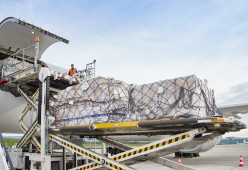
Across Swissport UK&I, our teams support operations at 25 airports. We serve more than 44 million passengers annually and handle over 760,000 tons of cargo each year. Behind those numbers is a complex operation spanning busy hubs, regional airports, fuelling operations, cargo facilities, trucking services, aircraft presentation teams and lounge environments. Every day depends on thousands of small decisions being made well.
Reliable aviation operations are built on people, standards, training, and operational discipline. We see this every day across safety, operational performance, customer focus, sustainability, and innovation.
Safety as our Foundation: More than compliance
Safety remains the foundation of every aviation operation.
In a high-pressure environment like UK&I aviation, safety cannot be treated as a compliance exercise. It needs to be part of culture, decision-making, and everyday behaviour on the frontline. Our Zero Harm vision and iCare safety culture are built around this principle.
Over the past year, a strong example of this in practice was the integration of Aviation Services Cargo (ASC) into our UK operations. This brought new colleagues, customers and capabilities into the business, expanding our ground handling and cargo activities across Heathrow and Gatwick. Successfully integrating teams, processes and facilities while maintaining consistently high safety standards required close collaboration, careful planning and a shared commitment to operational excellence.
This worked because safety remained central to every decision. By combining ASC’s specialist cargo expertise with Swissport’s global standards, training, and operational procedures, we were able to grow capability without losing control or consistency.
For airlines, safety and operational reliability are closely linked. Strong safety cultures reduce disruption, improve consistency, and help protect airline performance.
Operational Excellence: Delivering on the promise
Operational excellence is often measured in KPIs and on-time performance. Those metrics matter, but they do not tell the full story.
Airlines across UK&I are under increasing pressure. Schedules are tight, customer expectations continue to rise, and airport infrastructure is under strain. In this environment, operational excellence means delivering safe, efficient, and dependable performance every day, even as operations become more complex. For me, it comes down to strong teams, clear processes, and the ability to perform consistently in demanding environments.
Heathrow is a great example. It remains one of the most operationally demanding airport environments in Europe, yet we continue to deliver a 98.5% on-time performance rate. That performance comes from experience, coordination, and disciplined execution across the operation.
Our operational excellence is not driven by one initiative. It is built through thousands of small decisions and teams delivering well every day.
Customer focus: Strengthening airline partnerships
Customer expectations across aviation continue to rise, increasing the importance of reliable and responsive operational partnerships. One example of this was the commencement of ground handling services for Lufthansa Group at Heathrow Terminal 2, requiring close coordination and consistent execution in one of Europe’s most demanding airport environments.
Alongside operational performance, we also continue to strengthen customer satisfaction across the region, with improvements in both customer feedback and Net Promoter Scores over the past year. In practice, customer focus means understanding airline priorities, adapting quickly to operational demands, and delivering the consistency and resilience that long-term partnerships depend on.
Sustainability: From ambition to action
Sustainability is increasingly shaping aviation across every part of the industry. But sustainability only works when it works operationally.
Airlines do not need abstract commitments. They need practical, scalable solutions that support both environmental goals and day-to-day performance. In UK&I, that is why we focus on embedding sustainability into operations rather than treating it as a separate agenda.
One example is the rollout of electric Ground Support Equipment across our stations. It requires planning, investment, and changes to operational processes. But it also brings real benefits, including lower emissions, less noise, and more efficient ground operations.
Swissport’s ambition to electrify 55% of our global motorised GSE fleet by 2032 reflects the scale of change taking place across the industry. In UK&I, we have already reached 32.7% electrification.
We are also proud to have achieved EcoVadis Platinum for the second year running. It reflects the progress being made across our operations and the standards we are working to maintain.
Expectations continue to rise, not only from airlines, but also from airports, regulators, and passengers who increasingly expect measurable progress.
Innovation: Supporting smarter operations
Innovation in aviation is often associated with future technologies or major breakthroughs. In reality, the most valuable innovation is practical. It is the technology that helps frontline teams make faster, safer, and better-informed decisions every day.
That is where our focus sits.
Swissport Labs, our in-house innovation hub, develops solutions that address real operational challenges. One example is TurnSmart.AI, a platform that uses real-time AI-powered camera analytics to monitor key turnaround activities. By giving frontline teams faster, more accurate operational visibility, the technology helps reduce delays, improve coordination and support on-time departures. It also enhances safety by identifying potential risks and operational breaches in real time, helping teams prevent aircraft damage and maintain high safety standards.
In UK&I, we are also rolling out tools that improve frontline decision-making and operational visibility. This includes AI-enabled coaching tools, digital load control systems, and advanced cargo platforms that improve accuracy and tracking.
But technology is only part of the answer. Real value comes when it is combined with experienced teams who know how to apply it in live operations. That combination is what airlines are looking for: better visibility, stronger resilience, improved efficiency, and better outcomes for their customers.
The Swissport advantage in UK&I
Across UK&I, safety, operational excellence, sustainability, customer focus, and innovation are not separate priorities. In practice, they are connected in how we run our operations every day.
What that means is combining scale, consistency, and specialist expertise across one of the most demanding aviation markets in Europe.
We operate across 25 airports in the UK and Ireland, supported by more than 10,000 colleagues and serving over 44 million passengers each year. At Heathrow, we continue to deliver a 98.5% on-time performance rate, reflecting both the complexity of the environment and the discipline of the teams on the ground.
We are also investing in infrastructure to support future demand, including expanding cargo capacity at Manchester and Heathrow. Alongside this, we continue to roll out electric Ground Support Equipment and invest in practical technologies that support frontline operations.
Taken together, this reflects the Swissport advantage in UK&I: the ability to combine scale, operational discipline, and practical innovation to deliver safe and reliable operations for our airline and cargo customers.
And ultimately, what connects everything is expertise. Not as a concept, but as something demonstrated every day in how consistently teams apply knowledge, standards, and experience in real operations.

Contacts
- Group Communications
- [email protected]