






What airlines need from ground operations
By Mike Byrom, Chief Operating Officer, North America, Swissport International
North American aviation is moving at full speed. Airlines are managing tighter turnaround expectations, labor pressure, growing operational complexity, and increasing demands for reliability across their networks. In this environment, small disruptions do not stay small for long. They spread. That is the reality airlines operate in every day.
At Swissport, we see it across our network, from Toronto Pearson and New York JFK to Denver, Los Angeles, and Montréal. In this environment, airlines are not asking for more promises. They are asking for consistent execution under pressure.
In 2025, Swissport North America delivered 98.6% on-time performance across the region. That does not come from one initiative or one system. It comes from disciplined execution, experienced teams, and operations built to perform when conditions are not perfect.
That principle runs through everything we do: Safety, Operational Excellence, Customer-Centricity, Sustainability, and Innovation.
Safety: Built into the operation
In ground handling, operational performance and safety are part of the same conversation. Stable operations are built on strong safety discipline. Across North America, we have moved from reacting to incidents to reducing risk before it appears, through connected systems, real-time visibility, and frontline accountability.
At New York LaGuardia, dashboard cameras and driver coaching technology reduced risky driving behaviours by 49% in a matter of months. That translates directly into fewer incidents, less damage, and more stable ramp operations.
We are also piloting AI-enabled Aircraft Proximity Detection Systems (APDS), using computer vision and real-time monitoring to support decision-making during turnarounds. Not to replace judgment, but to strengthen it under pressure.
That discipline is reinforced through our iCare program and Zero Harm approach. Safety standards are embedded in training, inspections, governance, and daily operational routines across the region.
And airlines see the impact in performance. When Turkish Airlines named our Toronto operation its Best Warehouse and Ramp Handling Company globally in 2025, safety performance was a core part of that decision.
Operational Excellence: Reliability airlines can plan around
Across North America, the focus is simple: deliver reliable performance regardless of network complexity, seasonal peaks, or schedule volatility. That discipline supported growth in 2025, including Copa Airlines expanding into four new US destinations and Air Canada launching new services in Boston and Phoenix.
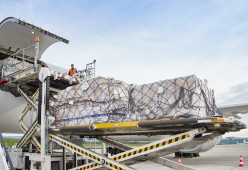
In cargo, execution matters even more. During a single Prime Week, our Denver operation handled nearly 1.8 million packages for Amazon Prime Air. At JFK, digital self-service tools and optimized dock management reduced cargo truck turnaround times by 20%, improving flow in one of the region’s most demanding cargo environments.
Reliable operations are also what enable growth. That same discipline continues to support new airline partnerships including Royal Jordanian, BermudAir, and TAP Air Portugal.
Customer-Centricity: Responsiveness under pressure
Airline partnerships are not defined during normal operations. They are defined when things go wrong. Across North America, we use weekly Net Promoter Score feedback to identify operational issues quickly and act on them before they become recurring problems. But data alone is not the differentiator. Execution speed is.
For airlines, responsiveness means fast decisions during irregular operations, stable baggage and cargo flows during peak periods, and teams that can adapt quickly when conditions change.
At JFK, tools such as CargoSpot Mobile, Integrated Weighing Systems, and AI-driven analytics improve visibility and processing speed across one of the region’s busiest cargo hubs.
The objective is simple: keep airline operations stable when pressure increases.
Sustainability: Operational progress, not future ambition
Airlines expect partners who can reduce emissions without compromising reliability. That requires investment in real operations, not just future commitments. Across the region, we continue expanding electric baggage tractors, belt loaders, and ground support equipment as part of Swissport’s fleet electrification strategy. Our ambitionis to electrify 55% of our global motorised GSE fleet by 2032. In North America, we have already reached 19% electrification.
At JFK, our partnership with Korean Air Cargo introduced the airport’s first fully electric freighter-handling operation. This is not a pilot. It is a working system moving cargo between warehouse and ramp using electric ground support equipment and dedicated charging infrastructure.
What matters here is consistency: sustainability only has value when it works in real operations, under real pressure, without adding friction to performance.
The same applies in Montréal, where sustainability measures in the Aspire lounge, from waste reduction to the removal of single-use plastics, were embedded into day-one operations without affecting service quality or the passenger experience.
Innovation: Technology that improves execution
In ground handling, innovation is only relevant if it improves how work gets done. Across North America, we are deploying technology that helps frontline teams make faster, more reliable decisions in real conditions.
Our rollout of connected safety systems through Samsara is improving visibility across stations and enabling more proactive intervention. At JFK, automation and upgraded cargo systems are increasing throughput while improving control in a high-volume environment. We are also piloting AI-powered cargo tools that use computer vision and predictive analytics to improve warehouse planning, reduce handling errors, and stabilize operations under peak demand.
The principle is consistent: if it does not improve execution, it does not belong in operations.
Looking ahead
North American aviation will continue to increase in complexity. Networks are denser, turnaround expectations are tighter, and pressure on operations is constant. Our responsibility is simple: make sure that complexity does not become instability for airline partners.
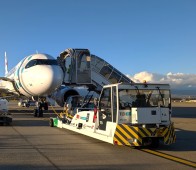
That requires disciplined operations, the right technology, and teams that know how to execute under pressure every day, across every station. Because expertise in ground handling is not defined by plans or presentations. It is defined on the ramp in very turnaround.

Contacts
- Group Communications
- [email protected]